As millions claimed the streets of New York City for World-Pride, one woman struggled to push a wheelchair bound woman through the crowd. The glitter-adorned sea of people made little effort to make a path, and the women, who held rainbow flags, were trying to map a plan to escape the chaos.
With a good chunk of the world’s population taking to the streets to celebrate diversity and inclusion, a wide range of people attended. But even though the parade was full of different backgrounds, some communities were not included.
“We can’t call Pride inclusive if it isn’t accessible,” said Elijah B. Tyler, a queer individual working on obtaining his interpreting certificate in American Sign Language. “Working to make it accessible is the only way we can achieve a truly inclusive space.”
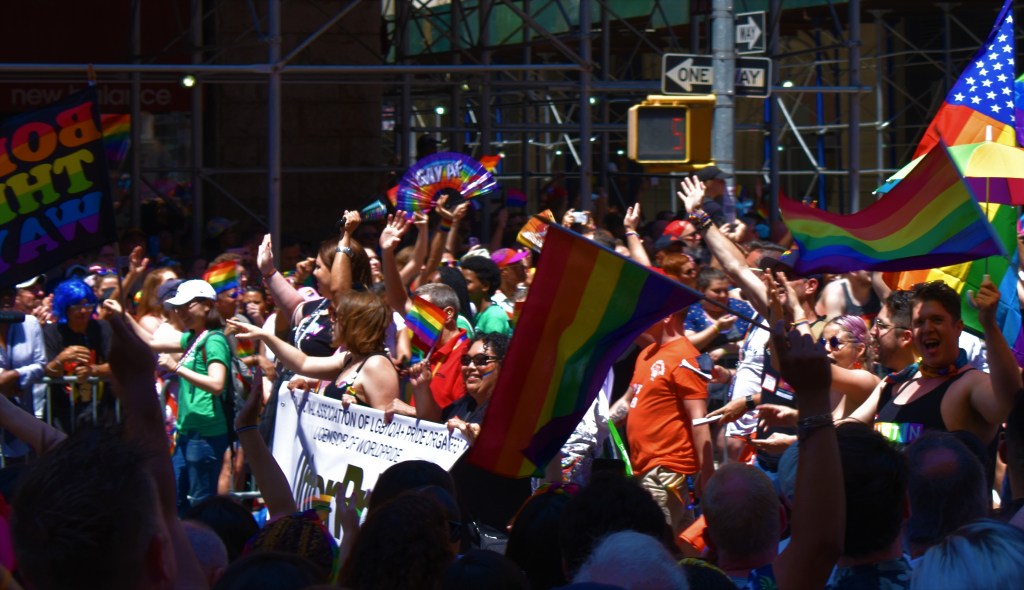
Disabled parade attendees were not easy to spot through the flood of people, because many did not attend. As crowds gathered and bodies squished, there was no room for a wheelchair and no safe place for the deaf, blind, or autistic.
The irony is not lost on this community that Pride was a riot before it was a celebration. The 50th anniversary of the first uprising at the Stonewall Inn, which saw protests of oppression against the L.G.B.T.Q.I.A.+ community, shows how crucial it is to recognize oppression is still alive.
Disabled people throughout history have struggled to gain independence and recognition. According to the 2012 United States Census, nearly one in five people have a disability.
Many L.G.B.T.Q.I.A.+ identifying people struggling with disabilities do not feel welcome in spaces where celebrations are held, such as bars and parades, which do not always maintain accessible spaces.
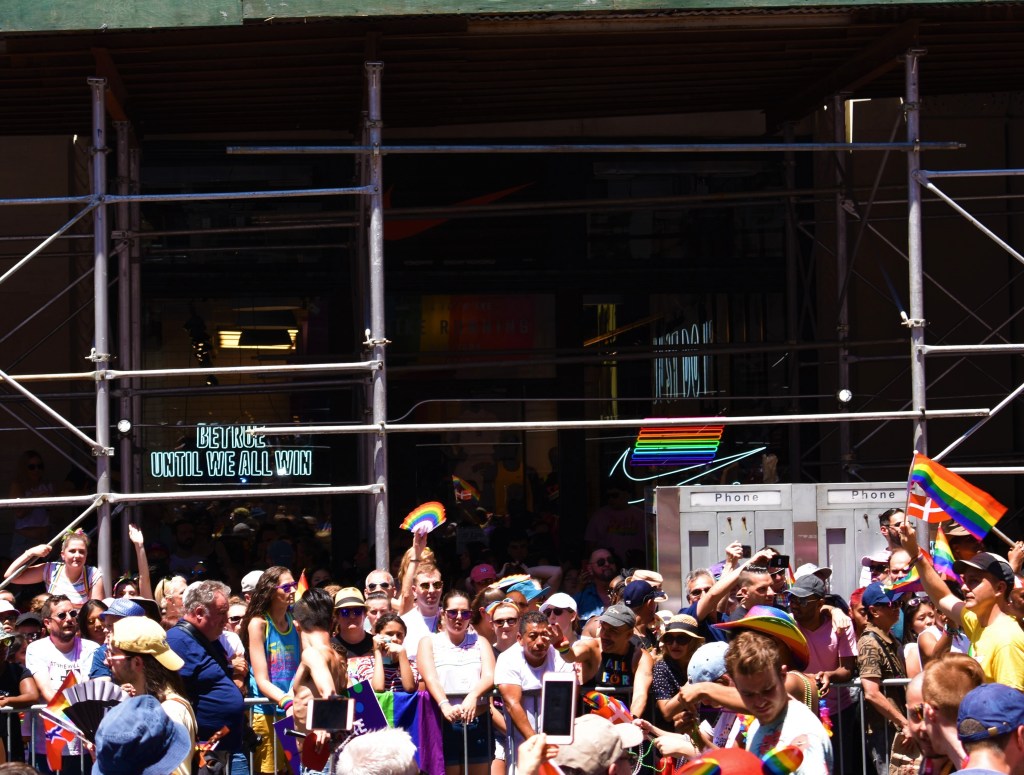
“Making spaces safer for people with disabilities means rejecting individuals and organizations that are violent against the disability community and/or people with disabilities,” wrote JP Galdamez in their article, This Pride Season, Equity in Accessibility Key to Celebrating LGBTQ Identities, for The Rainbow Times.
The lesson from the Stonewall Inn uprising has always been a message of inclusion and defying oppression, a landmark for the community. As the name representing the community has gone from L.G.B.T. to L.G.B.T.Q.I.A.+, in an ever-growing and inclusive attempt, disabled people within the community often do not feel those attempts reaching them.
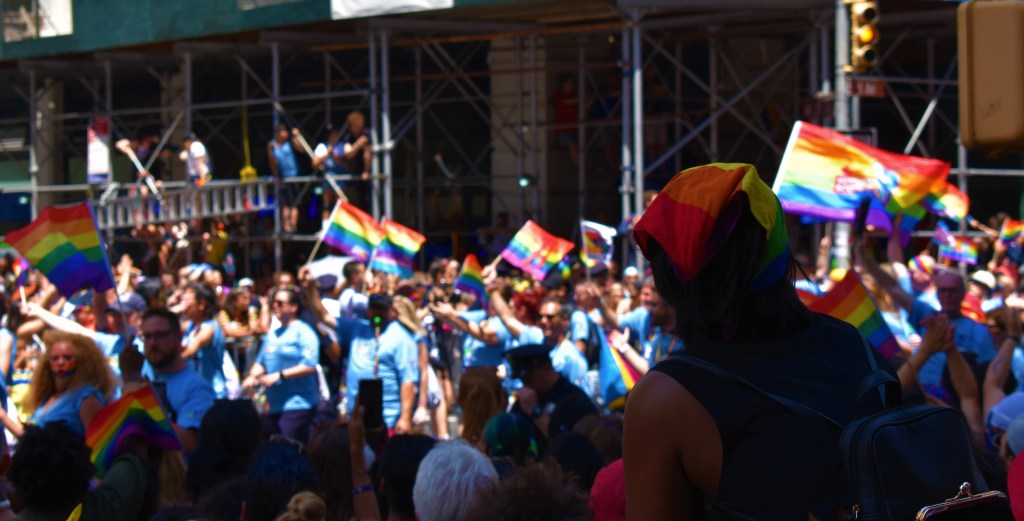
As people become more knowledgeable about various disabilities, inclusion becomes more common. According to Greenwich Village’s online guide for, World-Pride NYC Essential Information, some areas did have assigned interpreters and wheelchair access.
However, these accommodations were not advertised well or obviously situated. According to Tyler, one of his deaf friends was not able to attend another Pride event because there were no interpreters available.
Tyler had some recommendations on how to fix that problem. Cities need to include the cost of interpreters and ramps in the primary budget, which can be obtained through agencies. “There is no excuse for not having the money to make the event accessible. If you cannot afford interpreters, you cannot afford Pride.”
He also suggested acquiring a wide range of interpreters, where color and background vary. Interpreters with differing backgrounds will have a larger range of skills to communicate with multiple ethnic groups. “Accommodations look different for each individual, so being prepared with a variety of interpreters is essential.” Interpreters must also have elevated locations to work from so that they are clearly visible to all attendees that may need them.
With every event, small steps are taken, until it will be normal to see an interpreter on every stage and wheelchair access everywhere.
“If it isn’t for everyone,” said Tyler. “Then it’s for no one.”
Originally written July 4, 2019.
 Fiora Selvaggia